AI Agent Tools LangChain: Framework and Integration
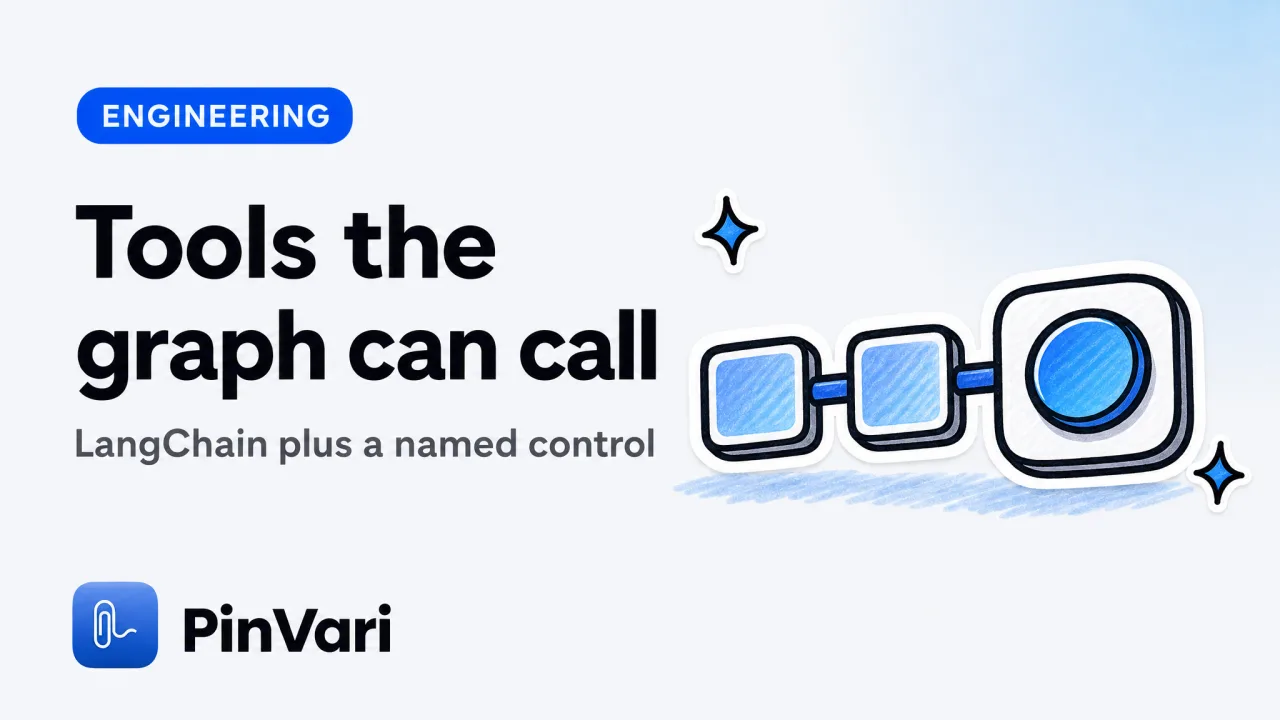
AI agent tools LangChain are callable functions bound to a model: search, SQL, HTTP, retrievers, and the custom wrappers a team writes. At scale you allowlist those tools the way you allowlist MCP tools.
Most LangChain posts stop at a Python class. The production failure is a tool that returns prose about a screenshot. The agent still guesses the control.
The wider AI agent tools catalog sits next to this post. Here is the LangChain slice and the integration that makes it useful on a Mac.
What are AI agent tools in LangChain?
In LangChain a tool is a typed function the model can call. The framework binds a name, a description, and a schema. The graph or agent loop decides when to call it.
That is the same idea as AI coding agents using model context protocol servers. LangChain is a Python (and JS) graph. MCP is a process boundary. You can wrap one in the other.
A tool is a contract. If the description is vague, the model will call it at the wrong time.
Write the tool description as if a new teammate will read it. Mention inputs, side effects, and what it must not do. The model reads that string.
Which LangChain tools matter for a team?
Retriever / vector store
Type: internal search
Use: policy, runbooks, old tickets
Skip if: the corpus is three markdown files. Just load them.
SQL / dataframe
Type: warehouse or local DB
Use: read-only questions you already allow
Skip if: the tool can UPDATE. Do not ship that.
HTTP / OpenAPI
Type: internal APIs
Use: status, feature flags
Skip if: it can hit prod write routes.
Web search
Type: public web
Use: current docs
Skip if: you already have a docs MCP.
Custom capture wrapper
Type: local HTTP or MCP bridge
Use: named UI element plus crop
Skip if: you only ever chat about code.
| Kind | Typical home |
|---|---|
| Retriever, SQL, HTTP | LangChain graph |
| Files, GitHub, screen | MCP next to the graph |
How do you integrate LangChain tools with MCP and screen context?
Keep LangChain for the graph you own. Keep MCP for the laptop tools the coding agent already uses. Do not rewrite GitHub access as a LangChain tool if Claude Code already has the GitHub MCP.
When the ticket is visual, wrap the capture. A thin tool that calls pinvari_next_instruction, or a human paste of that packet, beats a custom vision chain that re-OCRs a desktop PNG.
Hold Option-Command-A. Circle. Speak. The packet is on-device STT, AX role and label, frame, confidence, crop. Serve it on 127.0.0.1:3402. Your LangChain tool can HTTP to localhost or you can let Claude Code own that hop.
If the graph and Claude Code both exist, pick one writer. Two agents on one repo is a race. LangChain can plan. Claude Code can patch. Do not let both write.
One writer per repo. Integration is a boundary, not a pile of wrappers.
What breaks when LangChain tools have no visual grounding?
The agent describes the wrong button with high confidence. The SQL tool is fine. The HTTP tool is fine. The screenshot tool returns pixels. The graph still cannot bind this to an AXButton.
On canvas, OCR is the fallback. Confidence below 0.8 should ask. Encode that in the tool response as UNSPECIFIC, not as a guessed selector.
Do not log full screenshots of staging to a cloud trace. Keep the crop. Keep it local. The $39 launch license for the capture app is on the pricing block.
Window text up to 40,000 characters can ride along, including text scrolled out of view, plus the URL from AXWebArea. That is usually enough to find the string without a second search tool.
AI agent workflow is the pairing diagram. Tools without grounding are a loop that talks to itself.
Dwell 0.2s. Three marks, three buckets. Option-Command-P across a scroll. pinvari_request_capture if the graph needs a human mid-run.
FAQ
What are AI agent tools in LangChain used for?
They let the model call a function instead of only talking. Search, SQL, HTTP, and custom wrappers are the usual set.
Is LangChain the same as MCP?
No. LangChain is a framework for graphs and agents in your process. MCP is a protocol for tools in another process. Teams use both. Do not pick a religion.
Can LangChain see my screen?
Not by default. You add a tool that reads a capture. Prefer a named element over a raw PNG.
Which AI agent tools should a team allow in LangChain?
Read-only data, internal search, and one write path you review. Add screen context when the tickets are visual.
How do I stop a LangChain agent from calling the wrong tool?
Tighten descriptions. Fewer tools. Tests on the graph. A weekly prune, same as MCP.
Do I need LangChain if I already use Claude Code?
Not for repo edits. Use LangChain when you own a productized graph. Use Claude Code when you own a repo. Share the capture packet between them.
A team that productizes support triage can live in LangChain. A team that ships a checkout page can live in Claude Code. The named element is useful in both. That is the integration I would actually fund. A worked team setup looks like this.
The productized graph lives in LangChain: retrieve the runbook, call the internal status API, draft a reply. The laptop agent lives in Claude Code: edit the repo. They share a capture packet when the user pointed at a control.
Do not make LangChain the git writer unless that is the product. I have seen graphs that open PRs and then nobody knows which identity pushed. Keep git writes in the coding agent with a human review.
Graphs retrieve. Editors write. Cross the line on purpose, not by default.
If you wrap MCP as a LangChain tool, keep the names identical. pinvari_next_instruction should not become get_screen_thing. The on-call person will grep the first name.
Tests on the graph should stub the capture. Do not hit 127.0.0.1:3402 in CI. CI has no notch island.
When a tool returns UNSPECIFIC, the graph should ask. That is the same ask-never-guess rule as the Mac app. Encode it once. Reuse it. Tool descriptions I actually want:
- search_runbooks: read-only, returns chunks, never writes.
- get_flag: read a named feature flag, no mutations.
- get_capture: return the latest named element, crop path, transcript. Empty if none.
Three tools. That is a team-scale LangChain kit for a support-adjacent agent. You can add SQL later if legal signed off.
Fewer tools, better calls. The model is not honored by a long menu.
Compare this to stuffing ai agent workflow diagrams with twelve boxes. The diagram looks smart. The traces look lost.
LangChain also tempts people to add a vision model on every PNG. That is expensive and still a guess. A $39 one-time capture that already resolved AXButton is cheaper than a second vision hop. The price lives on the product page I already linked.
If Electron returns a bare group, the capture layer retries. Your LangChain tool should pass the confidence through. Do not threshold it away. The graph needs to know 0.74 is not 0.94. I will not invent latency numbers. Measure your own traces. If the HTTP tool is the slow hop, fix the API. If the model is looping on tool choice, delete a tool.
A quarterly review of AI agent tools in LangChain should print every tool name, owner, last production call, and write access. If the owner left the company, delete the tool the same week.
That review is boring. It is also how you stay out of a surprise write to prod.
For coding-only teams, skip LangChain. Read the AI agent tools post and install MCP. Come back to LangChain when you are shipping a graph as a product.
For mixed teams, write the boundary on one wiki page: LangChain owns X, Claude Code owns Y, PinVari owns the point-and-speak packet. New hires should not have to guess.
Write the boundary down. Integration fails in the gaps, not in the code. If you are starting from zero on AI agent tools in LangChain, clone nothing. Write one tool that returns the time. Then one retriever. Then stop for a week. Production graphs die from appetite, not from missing a SQL wrapper.
When you are ready for visual tickets, add the capture tool, not a second vision vendor. The named element is already the integration. Ship the graph with an owner name in the repo. Orphan graphs are how AI agent tools in LangChain become folklore. A name on a CODEOWNERS line is the integration step people skip.
Hand your agent the exact element
PinVari resolves what you point at into a named, executable instruction — on-device, no keys, your own agent. One click inside PinVari connects Claude Code, Cursor, VS Code or Codex — or paste one CLI line from pinvari.com/connect.
PinVari → Connect → your agent (one click)Get PinVari — $39 →