Best MCP Servers for Claude Code: Top 8 Integrations
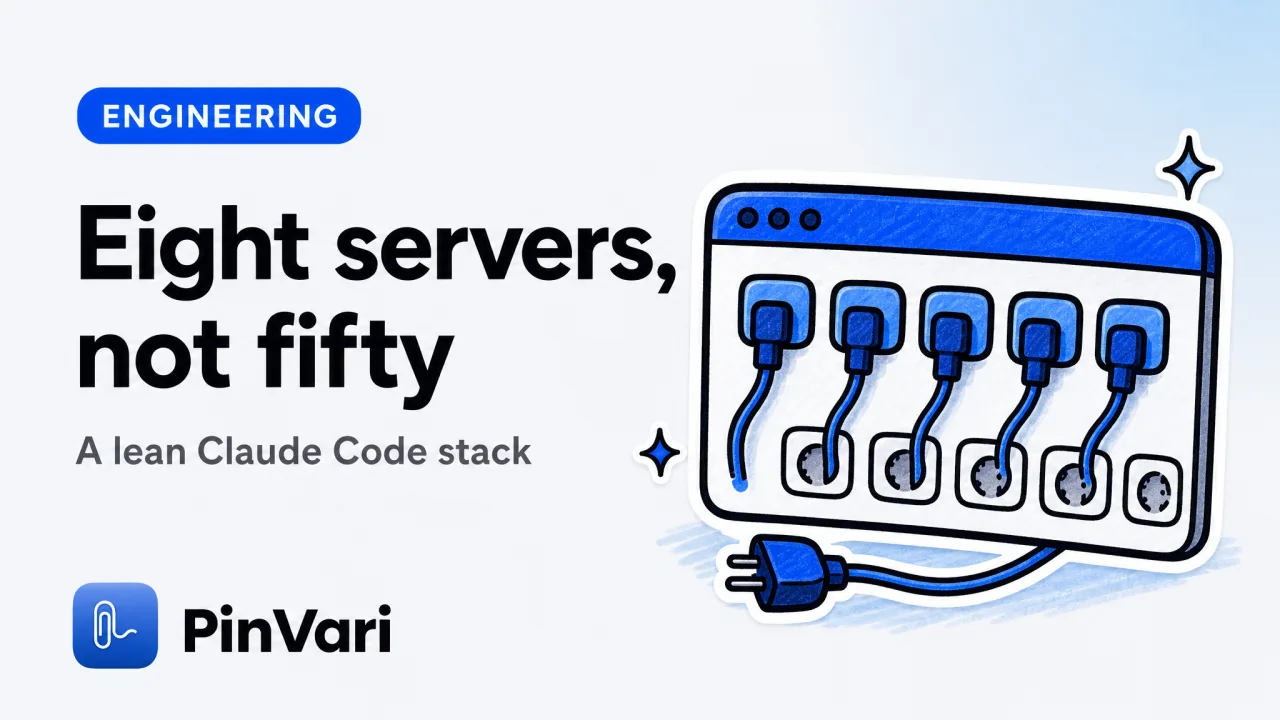
The best MCP servers for Claude Code are the ones that give the agent a concrete power it did not have: files, GitHub, a browser, a database, a tracker, or the named UI element on your screen. For a team at scale, install a short allowlist and prune anything nobody called last week.
Most lists dump fifty servers. Claude Code then wastes a turn picking a tool. A lean config is faster and easier to review.
If the protocol is still fuzzy, start with what an MCP server is and the model context protocol explainer. This post is the shortlist for Claude Code.
What are the best MCP servers for Claude Code worth adding?
An MCP server is a capability. Judge it by the one power it adds. Drop it if nobody invoked that power on a real ticket.
Claude Code MCP covers the add command. The MCP server list is the wider catalog. This post is the eight I would allow on a team laptop.
One capability per server. If a server does five unrelated things, you will not remember which tool name to ask for.
A good server has a boring tool name, a local or documented remote, and a failure mode you can explain. A cute server that scrapes a random site is a review problem.
Which are the top 8 MCP integrations for a team?
Filesystem
Type: local files
Gives the agent: read and write in the repo you already trust
Watch for: broad home-directory roots. Point it at the project.
GitHub
Type: remote API
Gives the agent: issues, PRs, reviews
Watch for: tokens in a shared config. Use a team app install.
Playwright or a browser driver
Type: local browser
Gives the agent: open a page, click, read the DOM
Watch for: it still does not know which control you meant on your staging laptop unless you show it.
Postgres or your database
Type: local or remote
Gives the agent: schemas and read queries
Watch for: write access in production. Do not.
Sentry or your error product
Type: remote API
Gives the agent: stack traces from a real crash
Watch for: PII in event payloads. Scope the project.
Linear or Jira
Type: remote API
Gives the agent: read and file tickets
Watch for: the agent filing vague tickets. Require an element field.
Figma
Type: remote API
Gives the agent: design data for front-end work
Watch for: using a PNG export as the only source. Data beats a flat image.
Docs or Context7
Type: remote
Gives the agent: current library docs
Watch for: stale training data. This is the cheap fix.
PinVari screen context
Type: local on 127.0.0.1:3402
Gives the agent: circled AX element, crop, transcript, window text
Watch for: the app must be running. The connector is HOME/.pinvari/mcp/pinvari-mcp.
| Server | Runs where |
|---|---|
| Filesystem, browser, PinVari | Local |
| GitHub, Sentry, Linear, Figma, docs | Remote API |
How do you install and prune MCP servers on a team?
Add servers one at a time. Use each in a real task before the next.
Claude Code reads a user or project config. Prefer project-scoped servers for repo-specific tools (database, Figma) and user-scoped for the laptop (filesystem, screen context).
Document the exact add command in the team wiki. Include the pinvari path form, not the bare name. The app talks on 127.0.0.1:3402 and must be running.
If a server did not get a tool call in a week, remove it. Each extra tool is a choice the model has to consider on every turn.
Prune weekly. A cluttered MCP config looks productive and acts slow.
Why does screen context belong on localhost?
A server that reads the live window sees work in progress, tokens in forms, and customer email. That data should not take a trip through someone else API.
PinVari stays on-device for transcription and OCR. You bring your own Claude Code session. The connector is local. Hotkey is Option-Command-A. Price is a one-time $39 launch license, listed on the pricing block.
Hold the hotkey, circle the control, speak. pinvari_next_instruction returns the named element, the words, the crop. pinvari_request_capture lets the agent ask you to point mid-task. pinvari_mark_done closes it.
On canvas, on-device OCR. Confidence below 0.8 asks. That is the contract I want from any screen server, not only this one.
Do not point a remote computer-use API at a laptop that has staging admin open. If the team needs computer use, isolate it. Local capture is the default for UI identity.
FAQ
What are the best MCP servers for Claude Code in 2026?
Filesystem, GitHub, a browser driver, your database, Sentry, Linear or Jira, a docs server, and a local screen-context server. That is eight. Start with three.
How do I add an MCP server to Claude Code?
Use the documented add command with a scope and a path. For PinVari the path is HOME/.pinvari/mcp/pinvari-mcp and the app must be running. See the Claude Code MCP post for the exact flags.
Should every teammate share the same MCP list?
Share the allowlist. Do not share tokens in a chat. Project-scoped servers belong in the repo docs. User-scoped servers belong on the laptop.
Why not install every popular MCP server?
Each server adds tools. More tools mean more chances the agent picks the wrong one. Weekly prune is cheaper than a bigger list.
Can Claude Code see my screen through MCP?
Only if you install a screen-context server and you capture. A filesystem server cannot see the UI. A screenshot paste is not MCP.
Is a local MCP server safer for UI work?
It keeps the frame on 127.0.0.1. That is the default I want when the window might hold a token. Remote computer-use is a different product with a different review.
A team of twelve can live on five servers for months. I have seen that work. I have also seen a laptop with twenty servers and a model that keeps calling the docs tool for a CSS color. Fewer tools. Better packets. That is the whole integration story.
How do you debug a silent MCP server in Claude Code?
If the tool never appears, the process is not running or the path is wrong. Open the Claude Code MCP list. Confirm the server name. Confirm the binary path exists.
For PinVari, the app must be open. The connector talks to 127.0.0.1:3402. If the app is quit, the server is a dead socket. That is not a Claude Code bug.
If the tool appears and returns empty, you did not capture. Call pinvari_next_instruction after a mark, not before. If the agent needs you mid-task, pinvari_request_capture lights the notch island.
Dead socket, not a dumb model. Check the process before you switch vendors.
Team review is a one-page checklist: name, scope, who owns the token, what the tool is allowed to write, and the last date someone used it. If nobody can name the owner, delete the server.
I also keep a tiny example ticket in the wiki: circle Pay now, speak make this the same green as the primary token, hand it to Claude Code. New hires run that before they add a ninth server. If they cannot finish the example, they are not ready for Figma MCP.
Screen context is the server people try to replace with a Playwright script. Playwright is great when you already know the selector. It is a detour when the bug is a visual miss on a native window. Keep both. Do not pretend a browser driver can see Xcode.
When Electron is AX-blind, set AXManualAccessibility and retry about 150ms. labeledDescendant walks a bare AXGroup. Chromium identity attributes name a title-less node. OCR is last. Write that in the wiki so people stop calling it magic. I keep a second example for data work: the Postgres server may read the schema, not production rows, unless a lead signed off. Write that next to the add command. People will otherwise point the tool at a prod URL because it was in an old dotenv.
Claude Code is happy to call whatever you installed. That is the feature. It is also the risk. The best MCP servers for Claude Code are the ones you can explain to a new hire in one sentence each.
If you want screen context without MCP, you can still copy a capture. MCP is the cleaner loop. Copy is the fallback when a contractor does not have the app. Do not block the ticket on a connector. If two leads disagree on the browser driver, pick one and write it down. The best MCP servers for Claude Code are the ones the team can name without opening the config.
Hand your agent the exact element
PinVari resolves what you point at into a named, executable instruction — on-device, no keys, your own agent. One click inside PinVari connects Claude Code, Cursor, VS Code or Codex — or paste one CLI line from pinvari.com/connect.
PinVari → Connect → your agent (one click)Get PinVari — $39 →