How to Vibe Code: Build Apps with Cursor, Lovable, v0
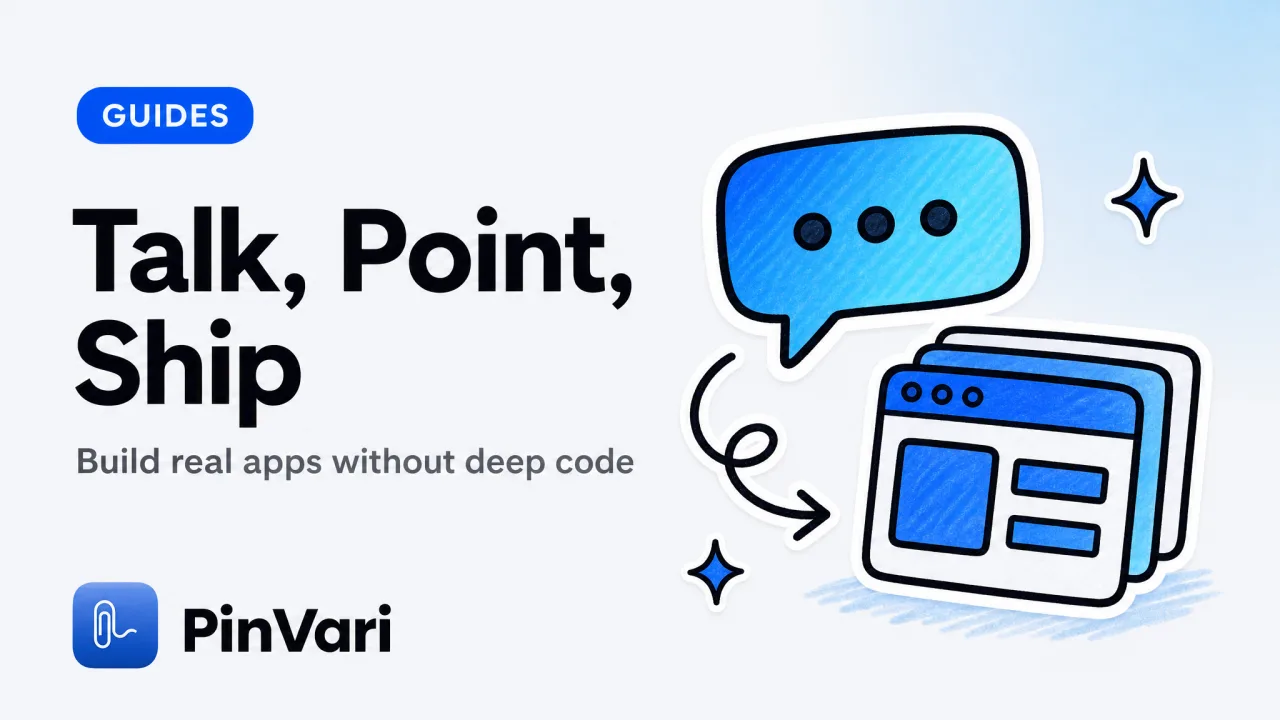
To vibe code, you describe what you want in plain language and let an AI agent write and edit the code, while you steer by testing the result and pointing out what is wrong. Learning how to vibe code is less about syntax and more about running a tight feedback loop: pick a tool (Cursor, Claude, Lovable, or v0), give it a clear goal, run what it builds, and tell it precisely what to change.
Most guides make it sound like magic, but the real skill is closing the gap between "that looks wrong on screen" and an instruction your agent can act on.
I have watched a lot of people learn how to vibe code and hit the same wall. They can build a screen in minutes, then lose twenty on a single misaligned button because they cannot explain, in words the AI understands, which element they mean.
What is vibe coding, and how do you start?
Vibe coding means building software by conversation. You state intent, the agent produces code, you react to the output, and you iterate.
You still make product decisions; you just stop hand-writing every line.
To start, pick one tool and one small project. Do not learn four tools at once — the workflow transfers, the buttons do not. A todo app, a landing page, or a simple dashboard is enough to learn the loop.
The tools split into two families. Browser builders like Lovable, v0, and Bolt generate a working web app from a prompt inside your browser.
Editor agents like Cursor and Claude Code work on real files on your machine, which matters the moment your project outgrows a single page.
Vibe coding is a steering skill. The AI supplies the syntax; you supply the judgment about what is right, what is wrong, and what to fix next. The tighter your feedback, the better the output.
How to vibe code step by step
Here is the loop that works, regardless of tool.
- Set a concrete goal. "A pricing page with three tiers and a monthly/annual toggle" beats "make a pricing page." Specifics reduce guessing.
- Let the agent scaffold. Accept the first version even if it is rough. You are establishing a base to react to, not shipping.
- Run it and look. Open the preview. This is where vibe coding actually happens — in your reaction to the running app.
- Point at what is wrong. Identify the exact element and the exact change. "The CTA button overlaps the heading on mobile" is actionable; "it looks off" is not.
- Give one instruction at a time. Batching five fixes into one prompt is how agents drift and edit the wrong thing.
- Verify, then repeat. Confirm the fix landed before moving on, so you never stack changes on a broken base.
The whole game is step 4. Ambiguity is the tax you pay on every round, and it compounds fast when several elements look alike.
How do you vibe code with Claude, Cursor, and Codex?
The core loop is the same; the handoff differs. Each agent needs to know what you see, and none of them can see your screen by default.
How to vibe code with Cursor: work in the editor, use the chat to describe changes, and lean on its file awareness. Cursor supports MCP servers, so a capture tool can hand it a resolved element directly instead of you pasting screenshots.
How to vibe code with Claude: Claude Code cannot see your screen on its own, so you feed it context — a screenshot, a description, or an MCP instruction. The clearer the target, the fewer rounds it takes.
Vibe coding apps using OpenAI Codex: the same rule holds. Codex writes strong code from a precise spec and flails on a vague one, so your job is to make "this element, this change" unambiguous.
How to vibe code using Lovable: describe the app, let it generate, then refine in the chat. Because it runs in the browser, you paste screenshots and text rather than using a local agent handoff.
Skip the wide grid. Compare tools as cards.
Cursor
Where it runs: Your editor.
Best for: Real projects and multi-file work.
Feedback: Chat plus an MCP handoff.
Claude Code
Where it runs: The terminal.
Best for: Refactors and whole-repo edits.
Feedback: Screenshots or MCP.
OpenAI Codex
Where it runs: Editor or terminal.
Best for: Spec-driven generation.
Feedback: A written spec.
Lovable / v0
Where it runs: The browser.
Best for: Fast web prototypes.
Feedback: Paste a screenshot plus text.
What's the fastest way to fix what looks wrong on screen?
Point at the broken element and speak the fix, so your agent gets a named target instead of a description it has to decode. This is the single biggest speedup available to a vibe coder, because element ambiguity is what wastes the most rounds.
Here is the difference in practice. You paste a screenshot and type "move this button down a bit." Your agent has to infer which button, from pixels, and if three buttons sit near each other it guesses.
When it guesses wrong, Claude Code fixes the wrong element and you burn another round-trip.
Now the resolved version. You circle the button, say "move this down 12 pixels," and the tool resolves AXButton "Get Started" at a known frame with a confidence score, then hands your agent the element plus the instruction.
This is how AI agents know which UI element you mean: the name and the position travel together, so "this" is no longer ambiguous.
Every wrong guess costs a full round-trip — the agent thinks, you verify, you re-prompt. At ten UI tweaks per session, ambiguity alone can eat half an hour. The fix is to remove the guessing, not to prompt harder.
Keep one instruction on screen at a time. When two buttons look alike, circle the one you mean before you speak so the agent never has to pick.
What are the most common vibe coding mistakes?
The failures are predictable, which means they are avoidable.
Vague instructions. "Make it look better" gives the agent nothing to target. Name the element and the exact change.
Batching fixes. Five changes in one prompt invites drift. One instruction, verify, repeat.
Describing instead of pointing. "The button in the top right, no the other one" is slower and less reliable than circling it. Deixis beats description — showing where you mean is faster than spelling it out.
No verification. Stacking edits on an unconfirmed base means when something breaks, you cannot tell which change did it.
For the tooling side of avoiding these, vibe coding tools compares the free and paid options that shrink the loop.
How does point-and-speak fit a Mac vibe-coding setup?
It replaces the screenshot-and-describe step with a single gesture. On a Mac, this is the difference between explaining your screen and simply showing it.
PinVari is built for exactly this loop. Hold ⌥⌘A, circle the element that looks wrong, and speak the fix; it screenshots the region, transcribes on-device, resolves the named element from the accessibility tree, and hands your own agent a resolved, executable instruction over a local MCP server.
It runs on-device with no API keys, works with Cursor, Claude Code, Codex, and Zed, and is a one-time $39 launch license rather than a subscription. Knowing how to vibe code well is mostly about removing ambiguity, and pointing removes it at the source.
FAQ
What does "vibe coding" actually mean?
Vibe coding is building software by describing what you want to an AI agent and steering the result, rather than writing every line yourself. You still make the product decisions and judge whether the output is right; the agent handles the syntax.
Can I vibe code without knowing how to code?
Yes, for many projects, especially with browser builders like Lovable and v0. You will get further, and debug faster, if you understand basic concepts like components and state, but you can start with plain-language goals and learn as you iterate.
How do I vibe code on a Mac?
Pick an agent (Cursor or Claude Code) or a browser builder (Lovable, v0), set a small concrete goal, run the output, and give one precise fix at a time. On a Mac you can also point at the broken element and speak the fix, which removes the ambiguity that slows the loop.
Why does the AI keep changing the wrong thing?
Because it is guessing which element you meant from pixels or a vague description. When several controls look similar, that guess fails, and the fix is to hand the agent the named element rather than a picture of the screen.
Is vibe coding with Cursor different from Claude Code?
The loop is the same, but the handoff differs: Cursor works in the editor and supports MCP, while Claude Code runs in the terminal and needs you to feed it screen context. Both write strong code from a precise instruction and struggle with a vague one.
What is the fastest vibe coding feedback loop?
Point at the element that is wrong and speak the change, so your agent receives a named target and the instruction in one step. That closes the "I see it is broken" to "it is fixed" loop in a single round instead of the three a wrong guess usually costs.
Hand your agent the exact element
PinVari resolves what you point at into a named, executable instruction — on-device, no keys, your own agent. One click inside PinVari connects Claude Code, Cursor, VS Code or Codex — or paste one CLI line from pinvari.com/connect.
PinVari → Connect → your agent (one click)Get PinVari — $39 →